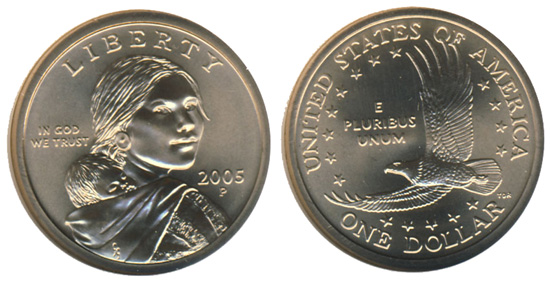
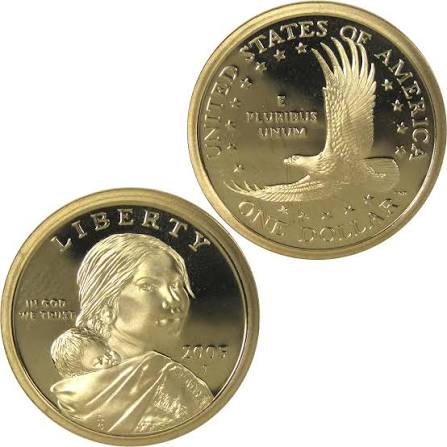
The 2005 Silver Dollar Value Guide

A PCGS-certified PR70 DCAM 2005 Sacagawea dollar has sold for over $200 at Heritage Auctions — extraordinary for a coin millions of people have set aside. Add in the 2005 American Silver Eagle (worth silver spot + collector premium), annealing stain errors commanding $200–$400+, and a rare missing edge-lettering variety, and this "golden dollar" year holds far more value than most people realize.

★★★★★  4.8 · 1,347 collectors used this tool

Check My 2005 Silver Dollar Value →
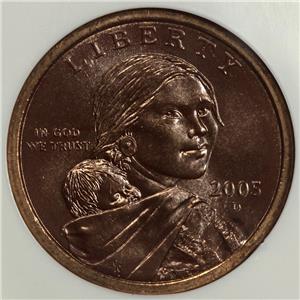
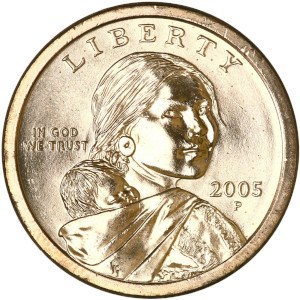
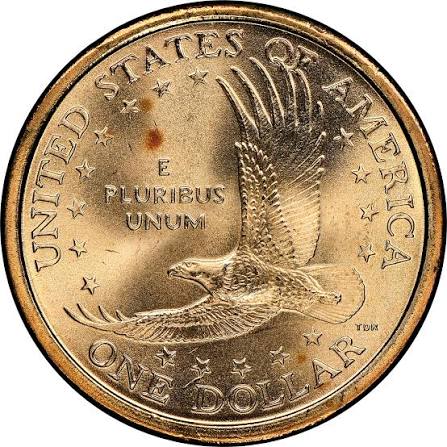
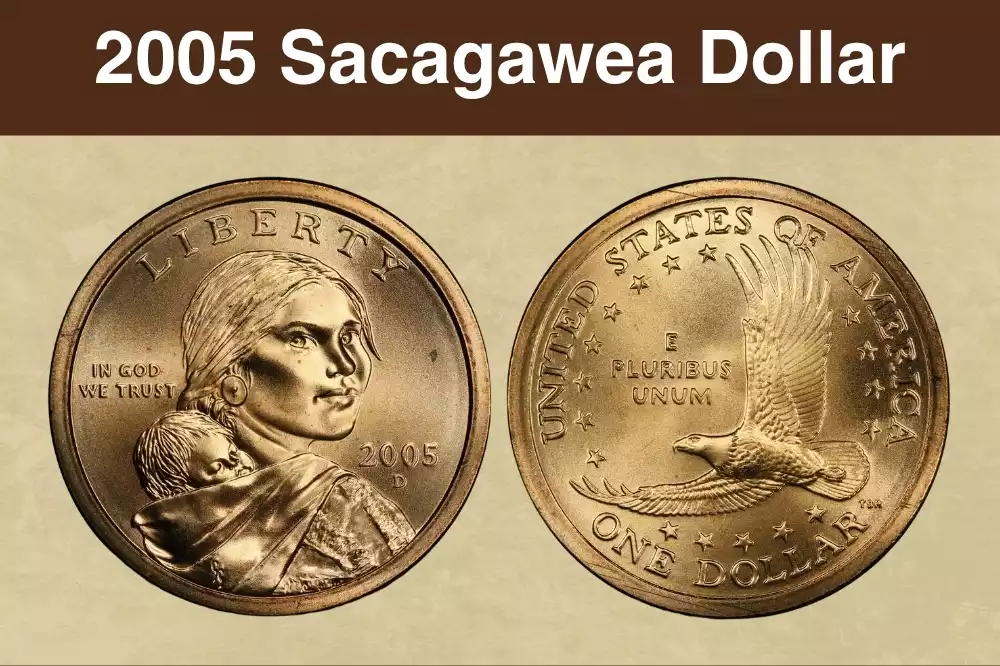
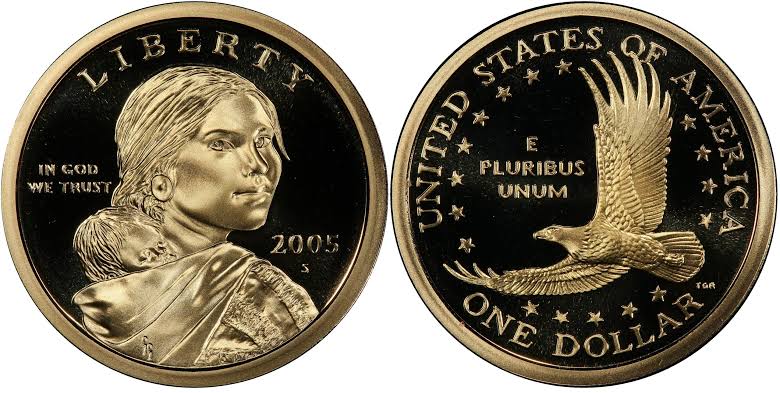
2005 Sacagawea dollar obverse and reverse showing Sacagawea with papoose and the flying eagle design
8.89M2005 Silver Eagle mintage
$200+PR70 DCAM sale at Heritage
$400+Annealing stain error high
4 typesVarieties to check for

PR70 DCAM Self-Checker: Is Your 2005 Proof Worth $200+?

The 2005-S Sacagawea Proof in PR70 Deep Cameo (DCAM) is the signature variety collectors chase. The dramatic contrast between frosted devices and mirror-like fields is what defines a true PR70 DCAM — and what separates a $10 coin from a $200+ specimen. Use the comparison below and the four-point checklist to assess your coin.

Side-by-side comparison of 2005-S Sacagawea dollar PR67 vs PR70 DCAM showing cameo contrast difference

❌ Common PR67–PR68 DCAM

  • Frosting on Sacagawea's face shows slight wear marks or hairlines from die contact
  • Mirror fields have minor haze, contact marks, or scattered bag marks
  • Eagle's wing feathers partially flattened or cloudy
  • Peripheral lettering sharp but field around it shows micro-abrasions

✅ Rare PR70 DCAM

  • Sacagawea's portrait and papoose show completely undisturbed, brilliant frosting
  • Mirror fields are perfectly reflective with zero contact marks or haze
  • Eagle's wing feathers fully struck with sharp, clean relief
  • Every inscription crisp and centered; absolutely no post-strike disturbance

4-Point PR70 DCAM Checklist

Describe Your Coin for a Detailed Assessment

Not sure where to start? Type a description of your 2005 silver dollar below. Mention the color, any unusual markings, the mint mark, and what the surfaces look like — our analyzer will match your description to known varieties and error types.

Mention these things if you can:

  • Color (golden, brownish, copper-toned, silver-white?)
  • Mint mark (P, D, S, W — or none visible?)
  • Edge (does it have lettering, or is it blank/smooth?)
  • Any doubling on LIBERTY, date, or portrait
  • Is it proof-like / mirror-bright, or flat luster?

Also helpful:

  • Unusual surface color or streaks (annealing stain?)
  • Any original packaging or mint set it came in
  • Weight (Sacagawea: 8.1g; Silver Eagle: 31.1g)
  • Whether it was found in circulation or purchased
  • Any prior grading: PCGS, NGC, ANACS, ICG slab?

Already know your coin's details?

Skip straight to the free value calculator — pick your mint, condition, and any errors in three steps.

Use the Calculator →

Free 2005 Silver Dollar Value Calculator

Answer three questions — mint mark, condition, and any errors — to get an instant value estimate.

1
2
3

Step 1: Which coin & mint mark do you have?

Select the coin type and mint. Sacagawea = golden dollar. Silver Eagle = silver-white, 1 oz silver.

Step 2: What is the coin's condition?

Choose the grade tier that best matches your coin.

Step 3: Any known errors or special varieties?

Check all that apply to your coin.

If you're not yet sure about your coin's mint mark or condition, a 2005 Silver Dollar Coin Value Checker tool lets you upload photos and get an AI-powered estimate without knowing any of those details first.

📋 Quick Navigation

The Valuable 2005 Silver Dollar Errors — Complete Guide

Four documented error and variety categories drive the most collector demand on 2005 silver dollars. Two appear on the Sacagawea golden dollar, one affects both coin types, and one is unique to the Silver Eagle series. Each card below covers exactly how the error occurred, how to identify it on your specimen, and what drives its premium at auction.

2005 Sacagawea dollar annealing stain error showing copper-brown discoloration on the manganese-brass surface
MOST VALUABLE
$50 – $400+

Annealing Stain / Burned Planchet Error

Before Sacagawea dollar blanks are struck, they pass through an annealing furnace to soften the manganese-brass alloy. If a blank moves incorrectly through the furnace or is exposed to uneven heat, chemical reactions between the metal and furnace atmosphere bake abnormal discoloration directly into the planchet surface — a permanent, pre-strike stain that no cleaning can remove.

To the eye, the affected area looks distinctly different from the normal warm gold of a 2005 Sacagawea dollar: look for brown, copper-orange, streaky dark patches, or muddy areas that are clearly not wear or cleaning. The discoloration is irregular and often crosses relief features without interruption. Under natural light, the stain may appear almost burnt. In extreme cases, the planchet can show deep copper-red blotches covering a significant portion of a face.

Collectors value these because the stain is a genuine mint-origin anomaly that dramatically transforms the coin's appearance, and certified examples are far more liquid than raw ones. High-grade certified examples with intense, well-defined staining carry the top premiums, with MS66–MS67 PCGS or NGC specimens reaching $200–$400+ depending on the severity and visual impact of the discoloration.
How to spot it

Flip the coin under natural daylight or a tungsten desk lamp. Rotate slowly. Annealing stain shows as brown, copper-orange, or streaky dark patches inconsistent with the normal warm-gold surface — unaffected by a coin's edge, lettering, or relief.

Mint mark

Primarily Philadelphia (P) and Denver (D) business strikes; rare on Satin Finish issues.

Notable

PCGS and NGC both attribute these as genuine mint errors. Certified MS66–MS67 examples with intense staining have realized $200–$400+ at Heritage Auctions. Uncertified examples sell in the $50–$150 range depending on visual impact.

2005 Sacagawea dollar Doubled Die Obverse showing doubling on LIBERTY lettering and date under magnification
MOST FAMOUS
$30 – $200+

Doubled Die Obverse (DDO)

A Doubled Die Obverse occurs during the die-making process when the hub imprints the working die twice at slightly different rotational or translational positions. The result is a die that carries two overlapping images of the design, which transfers that doubling to every coin it strikes. The 2005 Sacagawea dollar is known to have DDO varieties that are documented in the Cherrypickers' Guide to Rare Die Varieties.

Visual identification requires a 10× loupe or digital microscope. Focus on the letters L-I-B-E-R-T-Y and the date numerals 2-0-0-5. True hub doubling shows notched, split, or slightly offset serifs on the letters at a consistent rotational shift — different from the blurry, shelf-like appearance of mechanical doubling (machine doubling), which is common and essentially valueless. Sacagawea's facial features and the papoose's outline can also show subtle offset on strong DDO varieties.

Premium is driven by the clarity and strength of the doubling. Strong, clearly visible DDO varieties on high-grade MS64–MS66 examples command $50–$200+ when certified. Weaker varieties on circulated pieces may bring only modest premiums over face value, but the key is to have any potential DDO examined by a specialist before dismissing it as machine doubling.

How to spot it

Use a 10× loupe on the letters of LIBERTY and the date. True DDO shows split, notched serifs at a consistent offset angle across multiple letters simultaneously — not the blurry shelf look of common machine doubling.

Mint mark

Philadelphia (P) and Denver (D) business strikes; check both mints systematically.

Notable

Documented in the Cherrypickers' Guide to Rare Die Varieties. PCGS and NGC both certify 2005 Sacagawea DDO varieties. Certified strong-doubling examples in MS65 have traded in the $75–$200 range at coin shows and online auctions.

2005 Sacagawea dollar missing edge lettering error showing smooth blank edge instead of normal inscribed lettering
RAREST
$75 – $300+

Missing Edge Lettering Error

Beginning with the 2000 Sacagawea dollar, the U.S. Mint began applying edge lettering ("IN GOD WE TRUST · E PLURIBUS UNUM · 2005 ·") to the coin's edge in a separate manufacturing step after the main obverse and reverse strike. This separation of processes introduced a new error category: coins that escaped the edge-lettering step entirely, or received only partial lettering.

Missing edge-lettering errors are identified simply by examining the coin's edge under good lighting. A normal 2005 Sacagawea dollar has clearly incuse (recessed into the edge) lettering all the way around; a missing-edge-lettering example has a completely smooth or partially smooth edge with no inscriptions. The edge should be inspected under a loupe or bright directional light, rotating the coin through 360 degrees to confirm the absence of lettering.

These errors are the rarest of the major 2005 Sacagawea varieties because the missing-lettering step was easily caught at the mint; very few examples survived quality control. Collectors prize them for their dramatic, unmistakable nature — there is no other cause for a smooth edge on a post-2000 Sacagawea dollar. Certified PCGS or NGC examples in Mint State have sold in the $100–$300+ range, with raw uncertified examples bringing $75–$150 depending on grade and visual confirmation.

How to spot it

Hold the coin at eye level and slowly rotate it under a bright light source. A normal example has incuse lettering fully encircling the edge. Missing-lettering errors have a smooth, featureless edge with no inscriptions anywhere on the circumference.

Mint mark

Philadelphia (P) and Denver (D) business strikes; potentially any mint facility applying edge lettering.

Notable

Similar missing-edge errors on Presidential dollars (2007 onward) drove widespread collector awareness of this error class. PCGS and NGC certify 2005 Sacagawea missing-edge examples under the designation "Missing Edge Lettering." Certified examples are genuinely scarce in PCGS population reports.

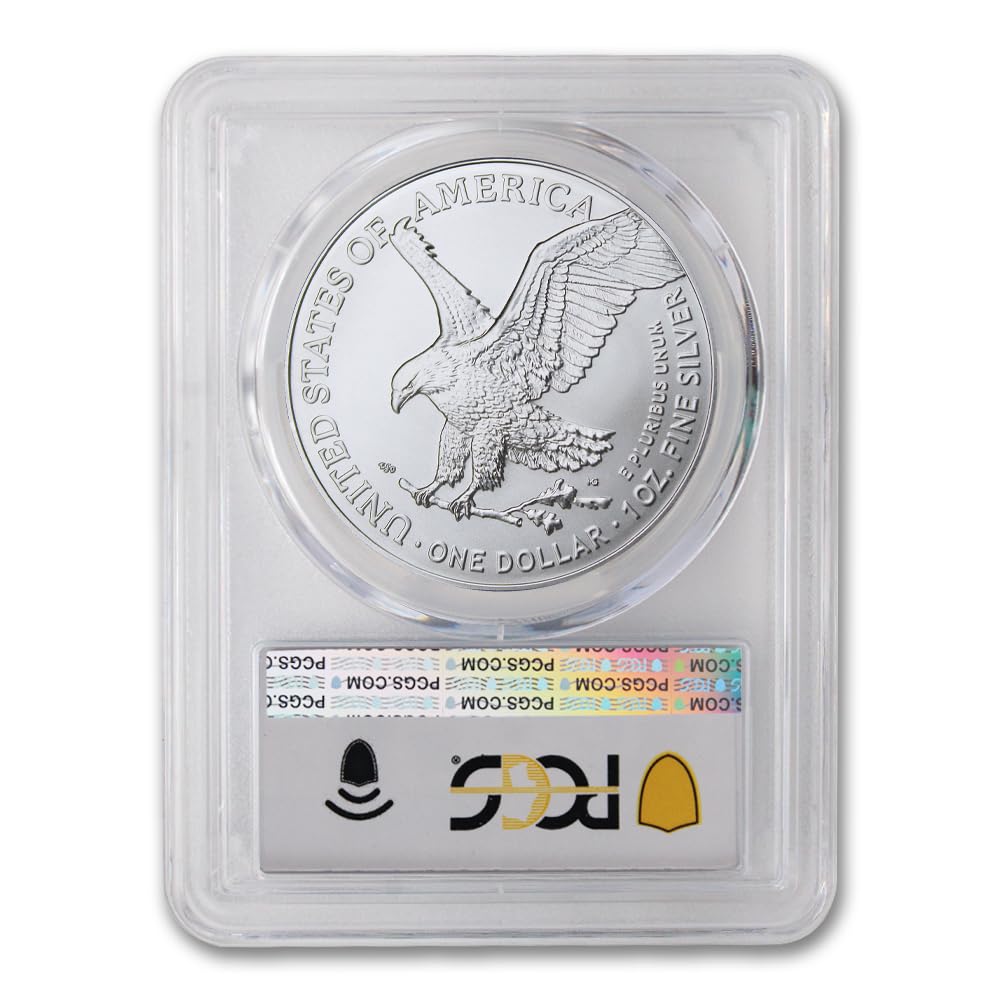
2005 American Silver Eagle MS70 First Strike in PCGS slab showing Walking Liberty obverse in perfect uncirculated condition
BEST KEPT SECRET
$75 – $200+

2005 Silver Eagle MS70 First Strike

The "First Strike" designation, created by PCGS, applies to American Silver Eagles submitted for grading within the first 30 days of each year's official release. It is not a mint error but a certification-driven variety that commands meaningful premiums because it indicates early-production strike quality and carries a distinctive label that registry set collectors specifically seek out. The 2005 issue is notable as the last year before mintages surged dramatically.

A 2005 Silver Eagle in standard MS69 or MS70 without the First Strike label sells at a modest premium over silver spot. The same coin with a PCGS or NGC First Strike (or Early Release) designation in a perfect MS70 holder commands a substantially higher price — typically $150–$200+ — because both the flawless strike quality and the provenance designation are simultaneously present. On the obverse, Walking Liberty's head, her outstretched arm, and the sun rays should show full, sharp detail with no weakness.

The 2005 Silver Eagle's position as the last of the moderate-mintage years (before post-2005 production climbed sharply) gives it additional significance for date-run collectors. A 2005-W Proof in PR70 DCAM also carries a premium, with the West Point Proof's cameo contrast being the key grading criterion. Both MS70 First Strike and PR70 DCAM examples represent the apex of the 2005 Silver Eagle collectible market.

How to spot it

Look for a PCGS or NGC slab with the "First Strike" or "Early Release" label designation alongside an MS70 grade. On the raw coin, examine Liberty's head and the sun rays with a 10× loupe for complete strike sharpness and absence of bag marks.

Mint mark

No mint mark (bullion strike); 2005-W for the Proof version from West Point.

Notable

PCGS #89975 for First Strike designation. The 2005 issue is identified by GovMint and Greysheet as "the last year of moderate production" before mintage surged — adding date-rarity significance. MS70 First Strike examples routinely appear in eBay completed sales at $100–$200+.

Think you've found one of these errors?

Head back to the free calculator and select the matching error type — get your instant value estimate in under a minute.

Get My Value →

2005 Silver Dollar Value Chart at a Glance

The table below summarizes value ranges for every major 2005 silver dollar variety across all grade tiers. For a thorough in-depth 2005 Sacagawea dollar identification breakdown with auction history, the linked resource covers every variety in full detail. Values reflect current market data; Silver Eagle ranges track silver spot plus collector premium.

Variety Worn / Circ. Uncirculated (MS63–65) High Grade (MS66+ / PR69–70) Tier
2005-P Sacagawea (regular) $1–$2 $2–$8 $15–$50 Common
2005-D Sacagawea (regular) $1–$2 $2–$8 $15–$50 Common
2005-S Proof PR70 DCAM ⭐ N/A $7–$25 $50–$200+ Valuable
Satin Finish SP68–SP69 N/A $5–$20 $30–$100 Modest
Annealing Stain Error $25–$50 $50–$150 $200–$400+ Rare
Missing Edge Lettering ⚠️ $50–$75 $75–$150 $150–$300+ Rare
DDO Variety $5–$15 $30–$75 $75–$200+ Valuable
Silver Eagle Bullion (raw) Silver spot Spot + $5–$15 MS69: $50–$80 Bullion
Silver Eagle MS70 / First Strike N/A N/A $75–$200+ Valuable

⭐ Signature variety (PR70 DCAM) highlighted gold. ⚠️ Rarest variety (Missing Edge) highlighted red. Values approximate; actual sales vary by certification service and market conditions.

🪙 CoinHix lets you photograph your 2005 silver dollar and instantly compare it against graded population data to estimate value on the go — a coin identifier and value app.

2005 Silver Dollar Mintage & Survival Data

Group of 2005 silver dollar coins including Sacagawea dollar varieties and American Silver Eagle on display
Coin / Mint Strike Type Mintage Notes
2005-P Sacagawea Dollar Business Strike (MS) ~2,520,000 Philadelphia; sold in rolls & bags by U.S. Mint
2005-D Sacagawea Dollar Business Strike (MS) ~2,520,000 Denver; similar to P issue in value and availability
2005-P Satin Finish Special Strike (SP) Included in U.S. Mint sets First year of Satin Finish sets; SP68 common, SP69 scarce
2005-D Satin Finish Special Strike (SP) Included in U.S. Mint sets Same production method as P Satin; struck with extra care
2005-S Proof Sacagawea Proof (PR) Included in proof sets San Francisco; PR70 DCAM is the most collectible grade
2005 Silver Eagle (bullion) Business Strike (MS) 8,891,025 No mint mark; last year of moderate production era
2005-W Silver Eagle Proof Proof (PR) Approx. 816,663 West Point; DCAM finish; meaningful for date-run collectors
Total (approx.) ~14.7M+ Combined across all 2005 silver dollar types
Composition specs: 2005 Sacagawea Dollar — 8.1g, 26.5mm diameter, manganese-brass clad (88.5% copper, 6% zinc, 3.5% manganese, 2% nickel) over pure copper core; plain edge with incuse lettering. Designers: Glenna Goodacre (obverse) / Thomas D. Rogers Sr. (reverse). 2005 American Silver Eagle — 31.103g (1 troy oz), 40.6mm diameter, .999 fine silver; reeded edge. Designers: Adolph A. Weinman (obverse) / John Mercanti (reverse).

How to Grade Your 2005 Silver Dollar

Grading strip showing four 2005 Sacagawea dollars from worn circulated condition to gem uncirculated MS66 quality

Worn / G–VF

High-relief areas — Sacagawea's cheekbone, the papoose's head, the eagle's breast — are flat and smoothed from circulation. The coin's golden luster is gone. Date and lettering remain fully readable but lack sharpness. Value: $1–$2.

Circulated / EF–AU

Light wear visible on Sacagawea's cheek and the eagle's upper breast feathers. Some original mint luster survives in protected areas (letter recesses, design cavities). Bag marks minimal. Value: $1–$5 for most dates.

Uncirculated / MS63–65

No wear, full mint luster, but contact marks from bag handling are present. MS63 has numerous marks; MS65 has only minor scattered marks and a pleasing eye appeal. Most 2005 Sacagaweas fall here. Value: $2–$15.

Gem / MS66–MS67

Exceptional strike sharpness, nearly flawless fields, and minimal contact marks visible only under magnification. MS67 examples require exhaustive searching through large bags. PCGS Population at MS67: only 254 for 2005-P. Value: $15–$50+.

Pro Tip — Color Designation: For Sacagawea dollars, the manganese-brass alloy can tone in various ways. Coins with attractive original golden luster command a premium over dull or artificially brightened examples. PCGS and NGC do not use the same "RD/RB/BN" color system as Lincoln cents, but eye appeal in the Sacagawea series is equally important for top-grade submissions. Never clean a Sacagawea dollar — artificial brightening destroys value instantly.

📊 CoinHix can cross-check your coin's surface details against its database of graded examples to give you a fast condition estimate before committing to professional grading — a coin identifier and value app.

Where to Sell Your Valuable 2005 Silver Dollar

The right venue depends on your coin type, grade, and how quickly you need to sell. Each option below has a distinct advantage.

🏛️ Heritage Auctions

The best venue for high-grade certified Sacagawea dollars (MS67, PR70 DCAM) and error varieties like annealing stains or missing edge lettering. Heritage reaches specialist collectors who pay full market value. Consignment fees apply; best for coins worth $75+ after grading. Submit for third-party grading (PCGS or NGC) before consigning.

🛒 eBay

The most liquid market for mid-range 2005 silver dollars. Check actual recently sold prices for 2005-P Sacagawea dollar MS listings to price your coin competitively. eBay's "Sold Items" filter shows real completed sales — not asking prices. Best for certified slabs and clean raw Mint State examples. Buyer fees average 3–5% for sellers.

🏪 Local Coin Shop

Quick and convenient for Silver Eagles close to melt value or circulated Sacagawea dollars worth face value. A reputable LCS dealer will offer spot price for raw Silver Eagles and a small premium for nice uncirculated Sacagaweas. Don't expect top-dollar for error coins — dealers build in a margin. Use eBay completed sales as your benchmark before accepting a shop offer.

💬 Reddit (r/Coins4Sale)

r/Coins4Sale and r/CoinSales connect you directly with fellow collectors, eliminating auction fees. Good for certified Sacagawea errors and Silver Eagle slabs priced at fair market. Requires some numismatic reputation (account age, post history). Less effective for raw, low-grade coins. Post sharp photos and include the PCGS/NGC cert number for verification.

💡 Get It Graded First

For any 2005 Sacagawea dollar showing an annealing stain, missing edge lettering, or suspected DDO — and for any Silver Eagle in near-perfect condition — professional grading by PCGS or NGC pays for itself. A certified MS66 Sacagawea or PR70 DCAM proof can sell for 5–10× more than a raw example. Factor in current grading fees (typically $30–$65 for standard service) when deciding whether to submit.

Frequently Asked Questions

How much is a 2005 Sacagawea dollar worth?

Most circulated 2005 Sacagawea dollars are worth face value ($1) or a small premium. Uncirculated examples graded MS65 or below typically sell for $2–$5. Higher grades like MS66–MS67 command $10–$50. Certified PR70 Deep Cameo proof examples have sold for over $200 at Heritage Auctions. Error varieties like annealing stain coins can reach $200–$400+ depending on severity and grade.

What is the 2005 American Silver Eagle worth?

The 2005 American Silver Eagle contains one troy ounce of .999 fine silver, so its base value tracks silver spot price. In raw uncirculated condition it trades at a small premium above spot. MS69 certified examples command a higher premium. MS70 graded coins are tougher to find and can sell for $150 or more. The 2005-W Proof version also carries a collector premium above melt value.

What makes the 2005-W Proof Silver Eagle special?

The 2005-W Proof Silver Eagle was struck at the West Point Mint with specially prepared dies and polished blanks, creating a dramatic Deep Cameo (DCAM) finish. It marks the final year of moderate production before the U.S. Mint sharply increased mintages. This makes 2005-W Proofs modestly scarce among serious date-run collectors and a meaningful addition to any Silver Eagle set.

Does a 2005 silver dollar have any errors worth money?

Yes. The 2005 Sacagawea dollar has several documented errors: annealing stain errors ($50–$400+), Doubled Die Obverse (DDO) varieties showing doubling on LIBERTY and the date, missing edge lettering errors, and the rare wrong-planchet error. The 2005 American Silver Eagle's most collectible variety is the First Strike label in MS70, which commands a premium over standard MS70 examples.

How can I tell if my 2005 Sacagawea dollar has a Doubled Die error?

Use a 10× loupe and examine the lettering LIBERTY, the date 2005, and Sacagawea's facial features on the obverse. A true Doubled Die Obverse (DDO) shows notched, doubled, or split serifs on the letters—not the blurry machine doubling that is common and valueless. The doubling should be visible at the same rotational offset consistently across multiple letters.

What mint marks exist on 2005 silver dollars?

The 2005 Sacagawea dollar was struck at Philadelphia (P) with a mintage of about 2,520,000 and Denver (D) with approximately 2,520,000 for circulation. Satin Finish versions were also made at both mints. The San Francisco Mint (S) struck proof examples. The 2005 American Silver Eagle bullion coin has no mint mark; the 2005-W Proof Silver Eagle carries a W mint mark from West Point.

Is the 2005 Sacagawea dollar made of silver?

No. The 2005 Sacagawea dollar (golden dollar) is made of a manganese-brass clad composition over a pure copper core. It contains no silver. The gold-colored appearance is from the manganese-brass outer layer. Only the 2005 American Silver Eagle is actually made of silver—one full troy ounce of .999 fine silver. People sometimes confuse the two coins because both are $1 face value.

What is the mintage of the 2005 Sacagawea dollar?

The 2005-P Sacagawea dollar had a business strike mintage of approximately 2,520,000 from Philadelphia, and the 2005-D from Denver had a similar mintage. Both mints also produced Satin Finish coins for the U.S. Mint's uncirculated sets. The 2005-S proof was struck at San Francisco. These relatively low mintages compared to earlier Sacagawea dollars make MS67+ examples moderately scarce.

What is the Satin Finish 2005 Sacagawea dollar?

In 2005 the U.S. Mint introduced Special Satin Finish coin sets. The 2005-P and 2005-D Satin Finish Sacagawea dollars were struck under extra care for these sets, giving them a unique flat-matte luster different from both proofs and standard circulation strikes. Examples up to SP68 are affordable and common; SP69 examples are notably scarcer. These are catalogued separately from business strikes.

How do I grade my 2005 silver dollar at home?

For a Sacagawea dollar, check the high points first: Sacagawea's cheekbone, the eagle's breast feathers, and the word LIBERTY. A worn coin shows flat, rubbed fields on these areas. A circulated coin retains some luster in protected areas. An uncirculated coin has full original luster with no rub. Gems (MS65+) require nearly perfect surfaces with only minor bag marks under magnification. For grading, compare to PCGS Photograde examples.

Ready to find out what your 2005 silver dollar is really worth?

Use the free calculator — it takes under a minute and requires no signup.

Calculate My Coin's Value →